






My Gear
A breif intro to my underwater equipment.

There’s no denying that underwater photography and scuba diving are gear‑intense activities. My camera gear usually weighs around 20 kg and my dive gear about the same (depending on whether it’s a cold‑water or warm‑water trip). This doesn’t leave much room for anything else when airlines are very strict on 23 kg per‑bag limits. The thought of heading overseas without my trusty cameras or reliable dive gear isn’t too appealing, so before booking any trips I always check whether carrying so much gear is even possible. In some cases, it’s just too hard. Air New Zealand isn’t too bad — they’re strict, but at least they have clear baggage policies and ways to add extra bags in advance at an agreed rate.
My standard gear is a Nikon D850 and a Z8 housed in the amazing Nauticam housings. Strobes are Inon Z330s and the Backscatter Mini Flash. I have Big Blue and Light & Motion focus lights. I usually carry a DJI Osmo Action 5, but video is always secondary for me — it’s usually just to support the stills. .
My standard gear is a Nikon D850 and a Z8 housed in the amazing Nauticam housings. Strobes are Inon Z330s and the Backscatter Mini Flash. I have Big Blue and Light & Motion focus lights. I usually carry a DJI Osmo Action 5, but video is always secondary for me — it’s usually just to support the stills. .

I have three dome ports and use these with the 15 mm Sigma fisheye on the D850 and the 8–15 mm Nikon fisheye on the Z8. The smallest is a 4" Saga port, ideal for close‑focus wide angle and wide‑angle macro. The middle port is a Nauticam 8.5" acrylic dome, used for standard wide angle and fisheye shots. A glass port would be nice, but that just adds even more weight to the kit. The final and largest dome is a Matty Smith 12" dome for split‑level shots — great fun to use but a bit of a chore to travel with.

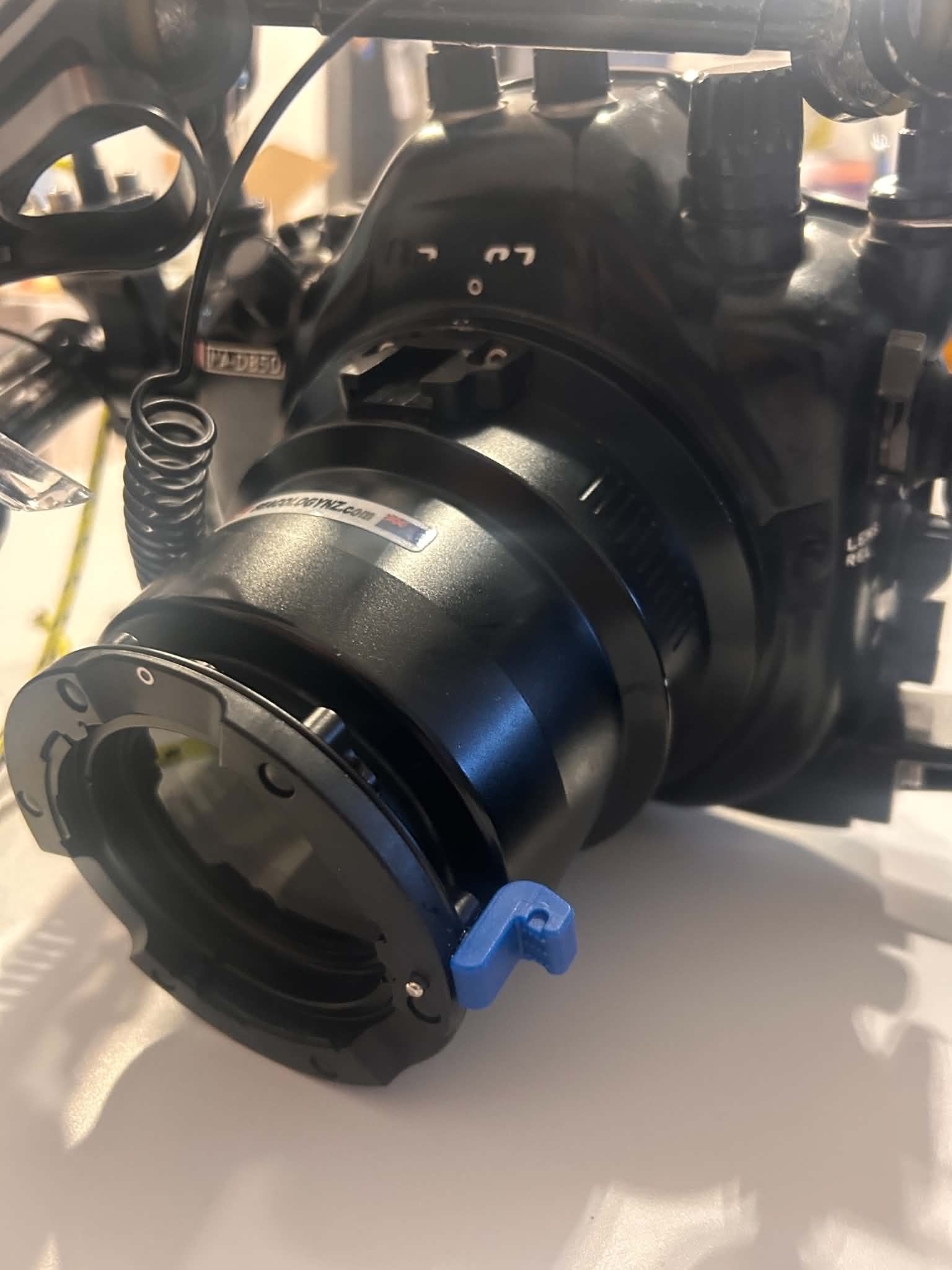
A recent addition to the kit is this rather odd‑looking Nauticam Extended Macro Wide Lens (EMWL). It really is a game changer and a fairly rare lens. It allows an extremely wide angle while still being able to focus within millimetres of the glass, giving a bug‑eye appearance. It’s the ultimate macro wide‑angle setup. The objectives are interchangeable, and I currently have the widest at 160 degrees as well as the 100‑degree option.
This lens has been amazing for me, and it’s inspired me to revisit animals I’ve photographed hundreds of times before to get a completely new perspective.
It’s a cumbersome beast, but worth it. It’s nicknamed the “Expensive Macro Wide Lens” due to being a significant investment. As far as I know, there’s only one other EMWL in New Zealand.
This lens has been amazing for me, and it’s inspired me to revisit animals I’ve photographed hundreds of times before to get a completely new perspective.
It’s a cumbersome beast, but worth it. It’s nicknamed the “Expensive Macro Wide Lens” due to being a significant investment. As far as I know, there’s only one other EMWL in New Zealand.

Looking a bit tired now, the workhorse — the D850 housing. The D850 was released in 2017 and is still considered a legendary bit of kit, holding its own against the newer mirrorless cameras. I can’t imagine getting rid of the D850 anytime soon, but it has entered semi‑retirement with the arrival of the Z8 in the kit bag.

The Z8 housing, armed with the EMWL. Bright, shiny and full of possibilities. It is new to me and I am looking forward to using this camera. The speed of the Z8 is very appealing and the electronic viewfinder review is something that is very appealing to me.


Where is all started....
My first underwater camera was in 2001 — a Nikonos 4A. I promptly flooded this notoriously troublesome camera at White Island while diving out there with the absolute legend John Baker on *Ma Cherie*. After that, I upgraded to a Nikonos V. Learning on these 35 mm film cameras was tough, but a good way to go. I went through a few other cameras before finally upgrading to digital with the Canon G‑series, ending with a G12. Although this camera was great, it was time to switch back to a proper SLR.
Thankfully, by then I’d figured out that Canon made great photocopiers… and Nikon made great cameras. So in 2013 I switched back to Nikon with the D7000 in an Aquatica housing. That camera won the Wildlife Photographer of the Year award for me in 2016 (see the “My Awards” page). A great camera.
After that, in 2018, I briefly shifted to the Nikon D810 — a camera I loved and got some great results with until it was brutally stolen from me in the carpark on Cannery Row, outside Backscatter in Monterey, California. (OMG, what a f’ing nightmare situation — camera, underwater housing, strobes, lights, laptops, and PASSPORTS, all gone in 60 seconds! Check out “My Yarns” for this story.) Once I’d recovered from that HUGE loss, I went all‑in and upgraded to the Nikon D850 and switched from Aquatica housings to Nauticam. I’ve never looked back since.
In 2026, I still have the D850 but also the Z8 — two of the best cameras around.
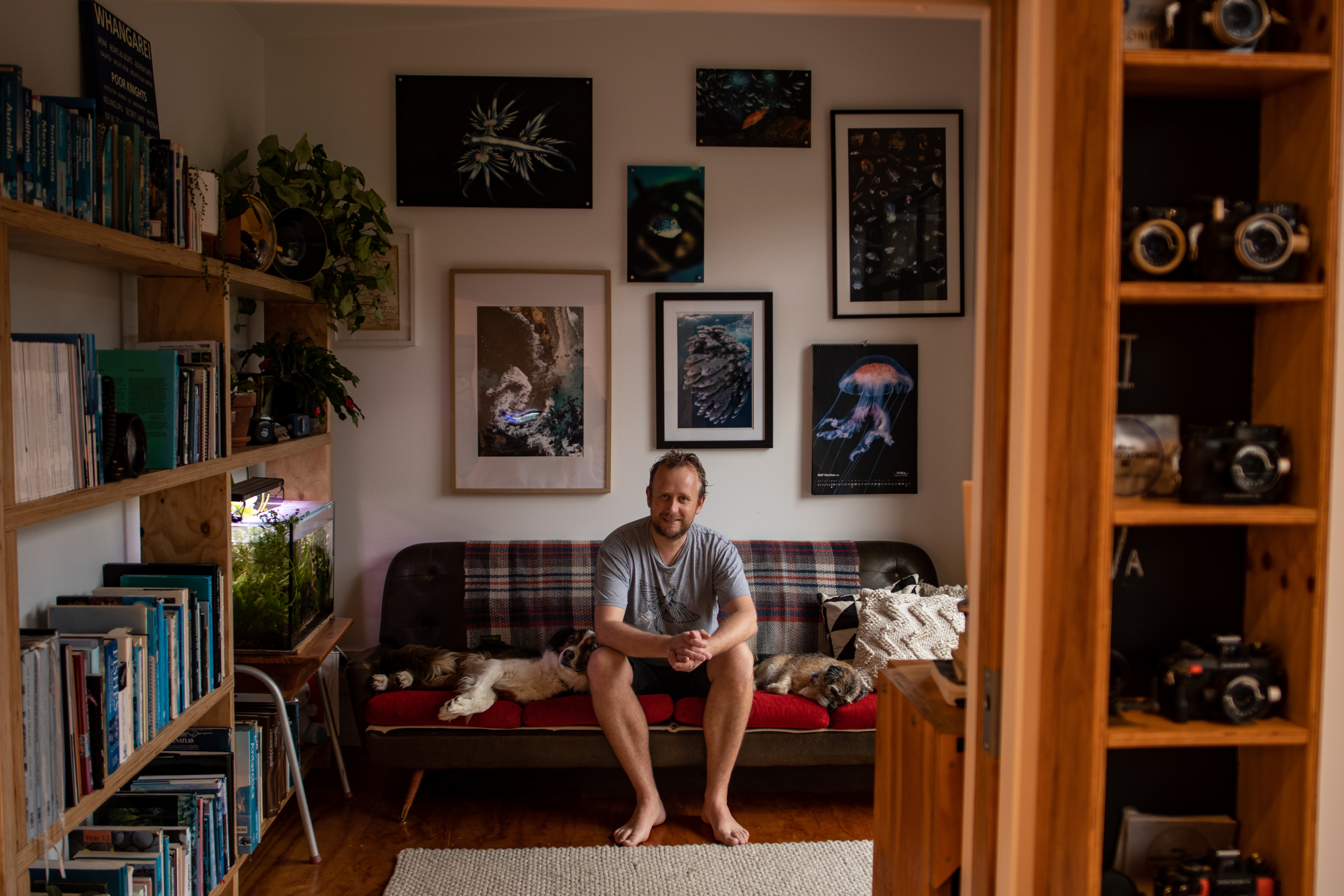
Pictured: my collection of the Nikonos‑series cameras, no longer used underwater.
My first underwater camera was in 2001 — a Nikonos 4A. I promptly flooded this notoriously troublesome camera at White Island while diving out there with the absolute legend John Baker on *Ma Cherie*. After that, I upgraded to a Nikonos V. Learning on these 35 mm film cameras was tough, but a good way to go. I went through a few other cameras before finally upgrading to digital with the Canon G‑series, ending with a G12. Although this camera was great, it was time to switch back to a proper SLR.
Thankfully, by then I’d figured out that Canon made great photocopiers… and Nikon made great cameras. So in 2013 I switched back to Nikon with the D7000 in an Aquatica housing. That camera won the Wildlife Photographer of the Year award for me in 2016 (see the “My Awards” page). A great camera.
After that, in 2018, I briefly shifted to the Nikon D810 — a camera I loved and got some great results with until it was brutally stolen from me in the carpark on Cannery Row, outside Backscatter in Monterey, California. (OMG, what a f’ing nightmare situation — camera, underwater housing, strobes, lights, laptops, and PASSPORTS, all gone in 60 seconds! Check out “My Yarns” for this story.) Once I’d recovered from that HUGE loss, I went all‑in and upgraded to the Nikon D850 and switched from Aquatica housings to Nauticam. I’ve never looked back since.
In 2026, I still have the D850 but also the Z8 — two of the best cameras around.
Pictured: my collection of the Nikonos‑series cameras, no longer used underwater.